
Long before H.P. Lovecraft introduced readers to Cthulhu and cosmic horror, Arthur Machen was exploring terrifying ideas about hidden realities, forbidden knowledge, and forces beyond human understanding.
Published in 1894, The Great God Pan remains one of the most influential horror novellas ever written.
Its disturbing themes, mysterious atmosphere, and unsettling implications shocked Victorian readers and helped shape the future of supernatural horror.
More than a century later, the story continues to fascinate readers and is often cited as one of the foundations of modern cosmic horror.
What Is The Great God Pan About?
The story begins with a controversial scientific experiment.
Dr. Raymond believes that human beings perceive only a tiny fraction of reality.
Determined to uncover what lies beyond ordinary perception, he performs a dangerous operation on a young woman named Mary.
The results appear catastrophic.
Years later, a series of strange events, unexplained tragedies, and mysterious deaths begin occurring around an enigmatic woman named Helen Vaughan.
As investigators attempt to uncover the truth, they discover connections to forces far older and stranger than anyone imagined.
Why The Story Was So Controversial
When The Great God Pan was first published, many critics condemned it as shocking and disturbing.
Victorian readers found its themes deeply unsettling because much of the horror is implied rather than explicitly described.
Machen understood that what readers imagine can often be more terrifying than anything directly shown.
This technique remains one of the story’s greatest strengths.
The Birth of Cosmic Horror
Many horror historians consider The Great God Pan one of the earliest examples of cosmic horror.
The story explores ideas that would later influence Lovecraft:
- Hidden dimensions
- Forbidden knowledge
- Ancient powers
- Human insignificance
- Unseen realities
- Madness caused by revelation
Lovecraft himself greatly admired Machen’s work and frequently praised him as one of the masters of weird fiction.
Helen Vaughan: One of Horror’s Most Mysterious Characters
Helen Vaughan is not a traditional monster.
Instead, she functions as a source of mystery and unease.
Wherever she appears, tragedy seems to follow.
Rumors surround her.
Lives are ruined.
People disappear.
Yet much of her true nature remains uncertain.
This ambiguity makes her one of horror literature’s most fascinating figures.
Atmosphere and Psychological Terror
Unlike many modern horror novels, The Great God Pan relies almost entirely on atmosphere.
Machen creates fear through:
- Rumors
- Fragmented accounts
- Witness testimony
- Strange discoveries
- Unanswered questions
The reader slowly pieces together the truth alongside the characters.
The result is a growing sense of dread that intensifies until the story’s unforgettable conclusion.
Themes
The novella explores several powerful themes:
Forbidden Knowledge
Some truths may be too dangerous for humanity to discover.
The Limits of Science
The pursuit of knowledge can have catastrophic consequences.
Hidden Reality
The world may contain dimensions and beings beyond human understanding.
Cosmic Indifference
Human beings occupy only a tiny corner of a much larger and stranger universe.
These themes would later become central to Lovecraft’s fiction.
Strengths
Incredible Atmosphere
The story creates sustained unease from beginning to end.
Historical Importance
One of the most influential horror stories ever written.
Psychological Horror
Fear emerges through suggestion rather than graphic violence.
Cosmic Horror Foundations
Many Lovecraftian concepts appear here first.
Memorable Mystery
The gradual revelation of truth remains highly effective.
Weaknesses
Ambiguity
Readers seeking clear answers may find the story frustrating.
Victorian Style
Some modern readers may need time to adjust to the prose.
Subtle Horror
Those expecting action-heavy horror may find the story understated.
Who Should Read The Great God Pan?
This novella is perfect for fans of:
- H.P. Lovecraft
- Cosmic horror
- Weird fiction
- Gothic horror
- Psychological horror
- Classic literature
- Supernatural mysteries
Anyone interested in the origins of modern horror should place it near the top of their reading list.
How It Compares to Lovecraft
Many readers describe The Great God Pan as a missing link between Gothic horror and Lovecraftian horror.
While Lovecraft expanded cosmic horror to include ancient gods and extraterrestrial entities, Machen focused on hidden realities existing just beyond human perception.
Both authors explore:
- Forbidden knowledge
- Hidden worlds
- Madness
- Human insignificance
Yet Machen’s horror feels more intimate and psychological.
Final Verdict
Rating: 10/10
The Great God Pan is one of the greatest horror stories ever written.
Its influence on Lovecraft, cosmic horror, and weird fiction cannot be overstated.
More than a century after publication, it remains deeply unsettling, intellectually fascinating, and remarkably effective.
For fans of horror literature, this novella is essential reading.
Recommended Reading
After finishing The Great God Pan, consider:
- The White People
- The Three Impostors
- The Novel of the Black Seal
- The Call of Cthulhu
- The Colour Out of Space
- The House on the Borderland
- The King in Yellow
- The Willows
- At the Mountains of Madness
- The Shadow Out of Time
Together these works trace the evolution of cosmic horror from its earliest roots to its most famous masterpieces.
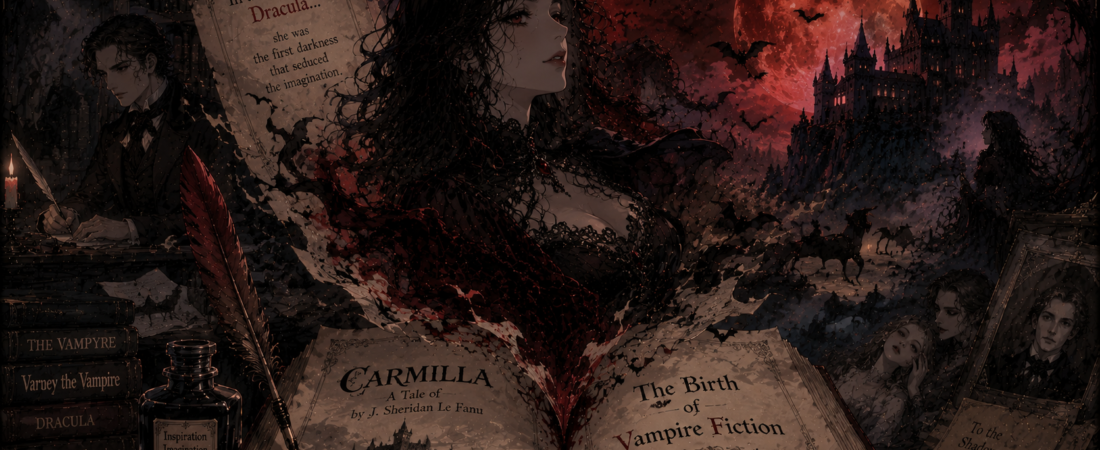
Long before Dracula ever set foot on English soil, a seductive shadow was already haunting the moonlit forests of Styria. While Bram Stoker’s count often takes the spotlight, the true pioneer of Gothic vampire terror was a mysterious woman named Carmilla. Published in 1872—more than two decades before Dracula—Joseph Sheridan Le Fanu’s masterpiece didn’t just tell a ghost story; it birthed the very conventions of the vampire genre we obsess over today.
From its chilling Gothic atmosphere to its complex psychological tension, Carmilla remains a hauntingly beautiful essential for any horror fan. Let’s dive into why this 150-year-old tale still has enough bite to keep you up at night.
That vampire was Carmilla.
Published in 1872 by Joseph Sheridan Le Fanu, Carmilla remains one of the most important and influential horror novels ever written. Combining Gothic atmosphere, supernatural mystery, psychological tension, and unforgettable characters, the novel helped establish many of the vampire conventions that continue to shape horror fiction today.
More than 150 years later, it remains essential reading for fans of Gothic horror.
What Is Carmilla About?
The story is narrated by Laura, a young woman living in an isolated Austrian castle.
Her quiet life changes dramatically when a mysterious carriage accident brings an unusual guest into her home.
The beautiful and enigmatic Carmilla quickly forms a close relationship with Laura.
However, strange events begin to occur.
Residents of nearby villages fall mysteriously ill.
Nightmares become increasingly frequent.
And Laura herself begins to weaken under circumstances she cannot explain.
As the mystery unfolds, Laura discovers that her charming companion may be hiding a terrifying secret.
The Original Female Vampire
One reason Carmilla remains so important is its central character.
Before Dracula became the world’s most famous vampire, Carmilla established many traits that would later define vampire fiction.
She is:
- Charismatic
- Intelligent
- Mysterious
- Seductive
- Dangerous
Unlike many monsters of nineteenth-century fiction, Carmilla is both terrifying and sympathetic.
This complexity helps explain her lasting popularity.
Atmosphere and Gothic Horror
Le Fanu excels at creating atmosphere.
The novel features:
- Isolated castles
- Moonlit forests
- Ancient ruins
- Family secrets
- Strange dreams
- Lingering dread
Rather than relying on violence, the story creates fear through uncertainty and suspense.
The result is a haunting reading experience that remains effective today.
Psychological Horror
Unlike many modern horror stories, Carmilla focuses heavily on psychology.
The novel explores:
- Obsession
- Trust
- Isolation
- Fear of the unknown
- Hidden desires
Much of the tension comes from Laura’s growing uncertainty about the true nature of her relationship with Carmilla.
This emotional complexity gives the story remarkable depth.
How Carmilla Influenced Dracula
Fans of Dracula will immediately recognize similarities.
Many vampire conventions originated or were refined in Carmilla:
- The aristocratic vampire
- Supernatural beauty
- Nighttime visitations
- Victims growing weak
- Ancient family histories
- Vampire hunters
- Gothic settings
Without Carmilla, vampire fiction might look very different today.
Strengths
Incredible Atmosphere
Few Gothic novels create such a powerful sense of unease.
Memorable Villain
Carmilla remains one of horror’s greatest vampires.
Historical Importance
An essential milestone in horror literature.
Strong Character Relationships
The emotional core of the story remains compelling.
Beautiful Prose
Le Fanu’s writing is elegant and immersive.
Weaknesses
Slow Pacing
Modern readers accustomed to fast-moving horror may find the story deliberate.
Short Length
Many readers wish the novel were longer.
Limited Action
The focus remains on suspense rather than action sequences.
Who Should Read Carmilla?
This novel is perfect for fans of:
- Dracula
- Gothic horror
- Vampire fiction
- Classic literature
- Supernatural mysteries
- Haunted castles
- Dark romance
- Victorian fiction
Readers interested in the origins of vampire fiction will find it essential.
How It Compares to Dracula
Although often overshadowed by Dracula, Carmilla offers a very different experience.
Dracula focuses on:
- Adventure
- Vampire hunters
- International conflict
- Large-scale threats
Carmilla focuses on:
- Intimacy
- Suspense
- Psychological tension
- Personal relationships
Many readers actually find Carmilla more unsettling because of its personal nature.
Final Verdict
Rating: 9.5/10
Carmilla remains one of the greatest vampire stories ever written.
Its Gothic atmosphere, psychological complexity, and unforgettable central character helped shape the future of horror literature and continue to influence writers today.
For fans of classic horror, vampire fiction, and Gothic literature, Carmilla is absolutely essential reading.
Recommended Reading
After finishing Carmilla, consider:
- Dracula
- The Monk
- The Castle of Otranto
- The Mysteries of Udolpho
- Frankenstein
- The Beetle
- The Lair of the White Worm
- The Jewel of Seven Stars
- The Phantom of the Opera
- Melmoth the Wanderer
Together these works represent some of the finest Gothic and supernatural fiction ever written.